If you live with Cerebral Palsy (CP) and feel completely exhausted by midday, especially after walking, standing, or getting through a typical morning, you’re not alone. Many people with CP describe walking as one of the most tiring parts of their day, even when distances seem short to others.
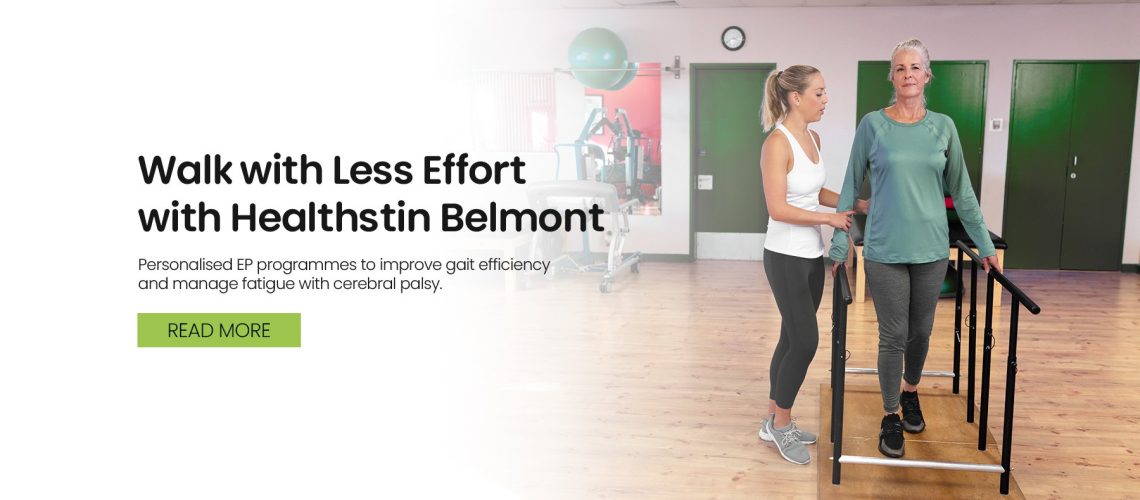
At Healthstin Belmont, we understand that fatigue isn’t a result of a lack of fitness or motivation. Often, it’s the result of the high energy cost of walking with CP. With the right Exercise Physiology (EP) training, it’s possible to improve gait efficiency, manage fatigue, and make everyday movement feel more sustainable.
Why Walking with CP Uses More Energy
Walking with Cerebral Palsy often requires significantly more effort due to differences in muscle tone, coordination, balance, and joint alignment. Research shows that people with CP can use up to 2–3 times more energy when walking compared to people without disability, particularly when gait patterns are less efficient.
According to research conducted by Van der Slot et al. (2012), fatigue is one of the most commonly reported challenges among adolescents and adults with CP, affecting participation in work, education, and community life. This means feeling “wiped out” by lunch isn’t a personal failure, but rather a physiological reality that needs the right support.
Understanding Fatigue in Adults with Cerebral Palsy
Fatigue in CP is multifactorial. It may be influenced by:
– Inefficient gait patterns that increase effort
– Muscle weakness or imbalances
– Spasticity or joint stiffness
– Reduced endurance over time
– Lack of targeted conditioning or pacing strategies
Without structured intervention, fatigue can limit independence and reduce confidence in daily activities. This is why managing fatigue in adults with CP requires more than general exercise, it needs tailored, functional training.
How EP Training Improves Gait Efficiency and Endurance
At Healthstin, our Exercise Physiology for Cerebral Palsy in Belmont programmes focus on reducing unnecessary energy expenditure during movement. Rather than pushing harder, we support people with CP to move more efficiently and sustainably.
Our evidence informed EP strategies may include:
– CP gait efficiency training to address movement patterns and reduce compensations
– Functional endurance training for disability to build tolerance for real world tasks
– Strength and motor control exercises integrated into functional activities
– Pacing and rest strategies to better manage fatigue across the day.
Current rehabilitation research suggests that task specific gait training and functional endurance based approaches, rather than isolated strength training alone, are more likely to support improvements in walking performance and fatigue management for people with CP. When personalised and appropriately progressed, these strategies can help individuals participate more comfortably in daily life.
Why Choosing Belmont Based CP Care Makes a Difference
Managing walking fatigue with Cerebral Palsy works best when care is consistent, local, and tailored to real life demands. At Healthstin Belmont, our team understands the everyday environments where fatigue shows up, whether at classrooms, workplaces, community settings, or at home.
As an experienced NDIS registered provider in Belmont, we deliver evidence based support that brings Exercise Physiology in a way that’s practical, progressive, and goal focused. This means programmes support NDIS Improved Daily Living outcomes, while also giving carers, teachers, and GPs clear, evidence based guidance they can rely on. Rather than treating gait, endurance, or fatigue in isolation, our approach looks at how movement fits into the whole day.
What Support Looks Like at Healthstin Belmont
We start by understanding how walking fatigue affects your energy, independence, and participation, not just how you move in the clinic. From there, our Exercise Physiology team at Belmont designs structured programmes that focus on improving efficiency, building functional endurance, and pacing activity across the day.
Support at Healthstin Belmont includes:
– Comprehensive movement and endurance assessments to understand how fatigue and walking affect your day
– Individually programmed Exercise Physiology training tailored to your goals, capacity, and functional needs
– Regular reviews and progression to ensure your program evolves as your needs change
– Clear, ongoing communication with families, schools, and healthcare providers
Whether your goal is to conserve energy, increase walking tolerance, or feel less exhausted during everyday tasks, our team works alongside you at every stage of your care journey.
Get Started with Support That Fits Your Day
If walking leaves you feeling drained early in the day, you don’t have to manage it alone. You can call 1300 090 931 to speak with our Belmont team, submit a referral to help us coordinate care with your GP or support network, or book a free consultation to discuss EP training programmes tailored to cerebral palsy. At Healthstin Belmont, our focus is on helping you move more efficiently, manage fatigue better, and get more out of each day.